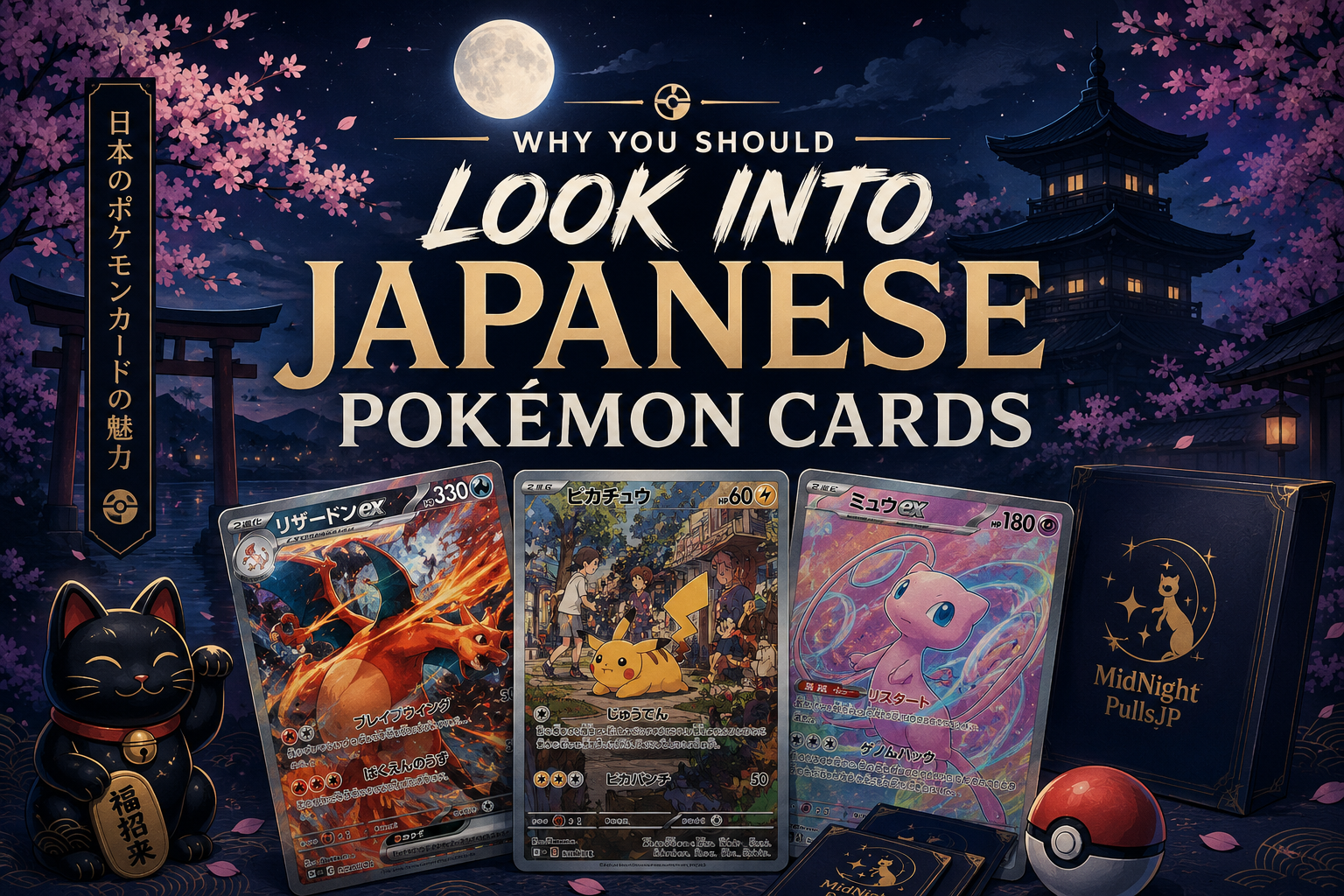

Most people know that Pokemon is, in essence, a Japanese product. It is created in Japan, the art is designed in Japan, the video games come out of Japan, as does all the merchandise. However, the way Japanese Pokemon cards “exist” is very different from their Western counterparts. In fact, there are more differences than you may think.
1. Japanese Pokemon Cards are Better Quality
When it comes to dealing with Pokemon cards, several factors need to be considered. The artwork is an obvious factor, but it’s not the main aspect. Instead, one needs premium cardboard to ensure a solid, authentic feeling per card. This is a key differentiator between Japanese Pokemon cards and those anywhere else in the world.
While an English card may feel sturdy and good, it pales in comparison to Japanese Pokemon Cards. The Japanese version feels premium, regardless of set, age, or card rarity. It has a different, more rigid texture to it, similar to how one can hold “average” cardstock and the “premium” counterpart.
If you ever have the opportunity, hold a card from your region in one hand, and any Japanese Pokemon card in the other. The difference is night and day, yet hard to explain without physically feeling it. Japanese Pokemon cards feel like they are built to withstand accidents and storms. English cards come VERY close in many ways, but they still lack that premium distinction.
2. A Better Card Finish
Most people like to collect the shiny Pokemon cards because of their wonderful artwork. However, that artwork can only reach its full potential when it is printed properly on the best cardboard available. Given the points raised above, it is not hard to see why Japanese Pokemon cards are in a league above the rest where card finish is concerned.
Not only is there more attention to detail, there’s also a difference in swirls, effects, color composition, holographic effects, etc. In fact, in some cases, cards from other regions look slightly different in color. One notable example is the Hop’s Wooloo, which is black in the Japanese set, yet brown in the Korean version. That difference is explained by a difference in overall card quality, card finish differences, and printing quality.
As an addendum, the borders on the cards are worth comparing too. Western cards have a much thicker border compared to the Japanese versions. A thinner border means more room for the Pokemon card art.
3. Japanese Pokemon Cards are More Affordable
When it comes to collecting anything, money should not be a limiting factor. Unfortunately, it so often is in the real world, especially in the year 2026. Prices are trending up and up, effectively making it harder for people to buy Pokemon cards. Paying over 200 euro for an English Pokemon booster box has become the norm, pricing individual packs between 6.5 and 7.5 euro each.
Japanese Pokemon cards are different. While they are also becoming more expensive, the price gap compared to English counterparts remains fairly stable. Then again, sometimes, the Japanese version is more valuable than an English copy.
It is not abnormal to pay 100 euro or less for a Japanese Pokemon booster box. These sets will have the same artwork as their English counterpart, yet are more affordable despite a better card finish and overall quality.
One thing to keep in mind is the difference in sets released in Japan. Most sets come in booster boxes of 30 card packs. However, premium sets, like the recent Terastal Festival or Mega Dream EX, come with only 10 packs per booster box. In those cases, it is not abnormal to pay 8-11 euro per booster pack, even when buying a full box.
4. No Energy Cards or TCG codes
One key differentiator between Japanese Pokemon cards and Western versions is the lack of energy cards. In the West, every pack has 10 cards, plus one energy card, and a TCG code. That creates extra “bulk” in every pack, as most people don’t play the online TCG. Moreover, a lot of collectors have more energy cards than they will ever need.
Japan does things a lot smarter. Yes, most packs have only 5 cards. However, in premium sets with 10 cards per pack, they still do not include energy cards or TCG code cards. The buyer always gets exactly what the pack says: 5 or 10 cards, nothing else, nothing wasted. It is remarkably efficient, and something that will hopefully become the norm in the Western world too.
5. More Attention to Packaging
Even though there is less “bulk” in Japanese card sets, they are not cutting any corners. Efficiency is a key aspect of Japanese Pokemon cards, but there is also tremendous attention to detail. More specifically, the pack artwork, as well as the booster box cover art, is miles ahead of the Western versions.
Some people will say art is subjective, and that is 100% valid. However, the art style used for Japanese Pokemon TCG products transcends the cards themselves. It is a continuous theme throughout the packaging, the card pack, the card art, etc. When buying these products, you pay for the experience from start to finish. Japan simply does things with that focus in mind, and it shows in the deliverables.
6. Guaranteed Japanese Pokemon Cards “Hits”
On the surface, a Pokemon card opening should be a journey. These days, it is primarily a race to the shiny card spot to see if the pack is any good. Western Pokemon card products often have decent pull rates. However, there are no “guarantees” when dealing with booster boxes. It may seem unlikely, but it is entirely possible to open up a 36-pack booster box without ANY “big hit”.
Things are different where Japanese Pokemon cards are concerned. There is a guaranteed “hit” in every booster box, with a chance of getting multiple hits. As such, the Japanese booster boxes create a more “fulfilling” overall experience. This is great news for people who value Pokemon art – like myself – or those who prefer a slightly more “controlled: booster box opening.
Final Thoughts
There are many reasons to look into Japanese Pokemon cards. Even so, there are equally as many reasons to stick with sets in English or in your local language if they have been accessible and affordable. It all comes down to what the user prefers and what their goal is. For art appreciation and collecting, language should never be a factor.
If you play the TCG – competitively or otherwise – English cards are often the better option in the Western world. However, if that is not part of the equation, it may be worth questioning one’s approach. Lower print and packaging quality, no hit guarantees, more “bulk per pack”, and other factors can make Western cards less desirable.
Sourcing Japanese Pokemon cards has also become easier. Many card shops can acquire stock on demand. Plus, there is also the booming secondary market to consider. Be prepared to pay more than Japanese retail pricing, though. Shipping costs, import fees, taxes, etc all need to be considered. Even so, the overall price is often MUCH lower compared to local products.
